
Company Vehicle Tracking Device Overview

Company vehicle tracking devices combine GPS telemetry, cellular connectivity, and advanced sensors to deliver real-time visibility into every vehicle, trailer, and asset in your fleet.

Core Tracking Device Capabilities

  • Real-time GPS positioning with sub-meter accuracy across all vehicles and assets
  • Ruggedized hardware designed for harsh environments and extreme temperatures
  • Multi-network connectivity with automatic failover for reliable data transmission
  • Advanced sensor integration for engine diagnostics, fuel monitoring, and door alerts
  • Long battery life and low-power modes for extended deployment flexibility

Company vehicle tracking devices provide the foundation for complete fleet visibility and operational control.

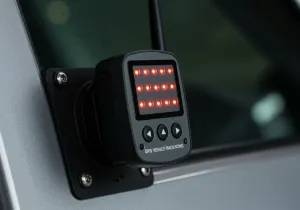
Company Vehicle Tracking Device Overview
Professional GPS tracking device hardware

Business Outcomes with Tracking Devices

Tracking devices drive measurable ROI by reducing fuel costs, improving driver safety, preventing theft, and optimizing asset utilization across your entire fleet.

Business Outcomes with Tracking Devices
Fleet management benefits from tracking devices

Tracking Device Benefits for Your Fleet

  • Reduce fuel costs by 15-30% through optimized routing and idle time elimination
  • Improve driver safety with behavior monitoring and real-time coaching insights
  • Prevent theft and unauthorized use with geofence alerts and immobilization
  • Extend vehicle lifespan with predictive maintenance based on engine diagnostics
  • Achieve positive ROI in 3-6 months through operational efficiency gains

Tracking devices keep leadership, dispatchers, and field teams aligned around trusted, real-time data.

Implementing Tracking Devices

Successful tracking device deployment requires proper planning, professional installation, team training, and continuous optimization to maximize ROI.

Implementation Playbook

  • Assess fleet requirements and select appropriate device models for your vehicles
  • Deploy devices with professional installation and network configuration
  • Train dispatch, field, and leadership teams on dashboard and mobile app usage
  • Establish KPIs and automated alerts for continuous performance monitoring
  • Optimize implementation roadmap with feedback from unified dashboards

With structured deployment, tracking devices become an always-on advantage for fleet operations.

Implementing Tracking Devices
Professional tracking device installation and deployment

Company Vehicle Tracking Device FAQs

Use Enter or Space to expand FAQ answers. Use Tab to navigate between questions.

What is a company vehicle tracking device?

A company vehicle tracking device is a GPS-enabled hardware unit installed in vehicles to provide real-time location data, vehicle diagnostics, and driver behavior monitoring for fleet management.

How does a tracking device work?

Tracking devices use GPS satellites to determine vehicle location, cellular networks to transmit data, and onboard sensors to capture engine diagnostics and driver behavior. Data streams to cloud-based dashboards for real-time visibility.

What types of vehicles can use tracking devices?

Tracking devices support cars, trucks, vans, trailers, construction equipment, and specialized vehicles. Devices are available in multiple form factors to fit different vehicle types and installation requirements.

How accurate is GPS tracking?

Modern GPS tracking devices provide sub-meter accuracy in open areas and typically 5-10 meter accuracy in urban environments. Accuracy improves with clear sky visibility and multi-constellation satellite support.

What is the battery life of tracking devices?

Battery life varies by device model and usage. Hardwired devices draw power from the vehicle, while portable units offer 7-30 days of battery life depending on transmission frequency and power settings.

Can tracking devices work without cellular coverage?

Devices with GPS-only mode can store location data locally and sync when connectivity returns. Dual-network devices with satellite backup ensure connectivity even in remote areas.

How are tracking devices installed?

Most devices are hardwired to the vehicle's OBD-II port or power system by professional technicians. Installation typically takes 15-30 minutes per vehicle and requires no modifications to the vehicle.

What data do tracking devices collect?

Devices collect GPS location, speed, heading, engine diagnostics, fuel level, door status, harsh events, and driver behavior metrics. Data is transmitted in real-time or batched based on configuration.

How secure is tracking device data?

Data is encrypted in transit and at rest using industry-standard protocols. Access controls, role-based permissions, and audit trails protect sensitive fleet information from unauthorized access.

Can tracking devices be tampered with?

Devices include tamper detection alerts that notify managers if a device is removed or disconnected. Anti-tamper features and geofence alerts help prevent unauthorized device removal.

What is the cost of tracking devices?

Device costs vary by model and features, typically ranging from $200-$800 per unit. Monthly service fees cover connectivity, cloud storage, and platform access.

How many devices can I deploy?

Tracking device solutions scale from 5 to 5000+ vehicles. The platform supports unlimited users, role-based permissions, and enterprise-grade infrastructure for large deployments.

Do tracking devices work internationally?

Devices with multi-network support work in most countries with cellular coverage. International roaming plans and satellite backup options ensure global connectivity.

Can I integrate tracking devices with my existing software?

Yes, tracking devices integrate with dispatch, maintenance, ERP, and CRM platforms through APIs, webhooks, and scheduled data exports. Seamless integration eliminates duplicate data entry.

What happens if a device fails?

Devices include redundant systems and automatic failover mechanisms. If a device fails, alerts notify managers and replacement devices can be deployed quickly with minimal downtime.

How do I track multiple vehicles?

The cloud dashboard displays all vehicles on a single map with real-time status, alerts, and performance metrics. Customizable views and filters help manage large fleets efficiently.

Can I set geofences with tracking devices?

Yes, geofences trigger alerts when vehicles enter or exit defined areas. Geofences support multiple zones, time-based rules, and automated actions like notifications or immobilization.

What reports are available?

Reports include fleet utilization, stop detail, route history, driver scorecards, compliance logs, and custom reports. All reports are exportable and can be scheduled for automatic delivery.

How do I monitor driver behavior?

Devices capture speeding, harsh acceleration, harsh braking, and cornering events. Driver scorecards and coaching insights help improve safety and reduce insurance costs.

What support is available for tracking devices?

Support includes device provisioning, professional installation, user training, technical support, and continuous best-practice coaching. Most fleets are fully operational within 1-2 weeks.